
bespoke approach
Innovation is tough business. At the front-end sense-making is required while in the design of the service orchestrating the whole becomes as important as drilling down in the details. Understanding your customer’s needs is in that respect the very beginning. To explore all the possibilities of problem solving and opportunity finding your teams need to be engaged beyond that initial spark, grow confident and feel empowered throughout their way.
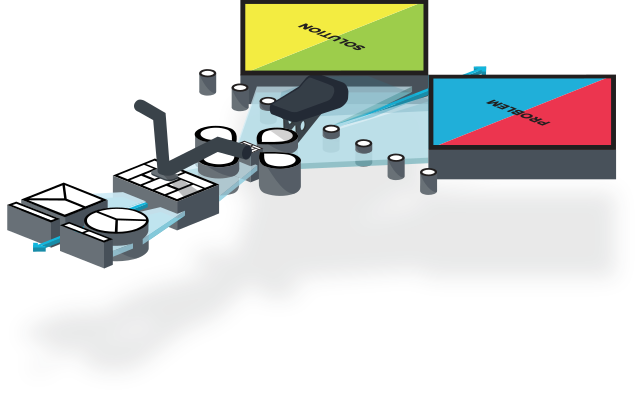
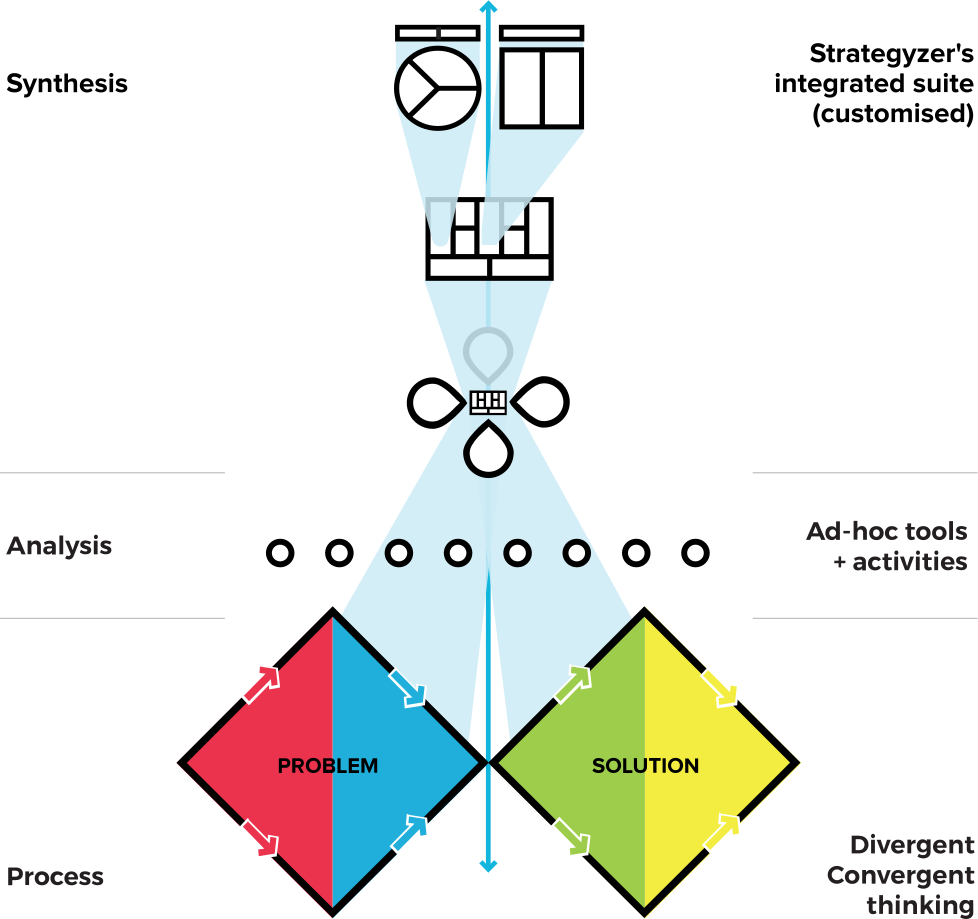
My framework was built on the back of established and emergent thinking to be a complete support system. One ready to contract or expand as the need arises, guiding action without prescribing, and helping set teams on time and on point within and among themselves. For the sake of simplicity, I have boiled it down into three abstraction layers:
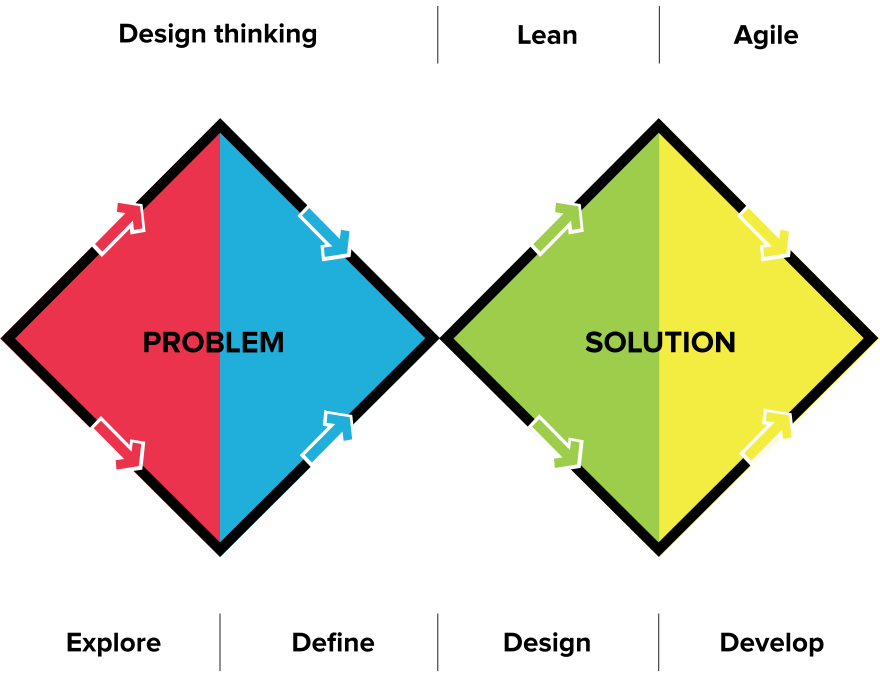
Although DesignThinking is in reality nonlinear and iterative it is possible to articulate an underlying process. The Double Diamond model from the UK Design Council is the one I found most fit for purpose:
- It splits the process in Problem and Solution spaces, which helps to keep in mind there’s an outcome to be attained.
- Marks Divergent and Convergent modes of thinking, so commonly overlooked in innovation.
In addition, the model remains flexible to mark dominant methodologies like Lean and Agile, or add phases without loosing integrity.
Ad-hoc tools + activities
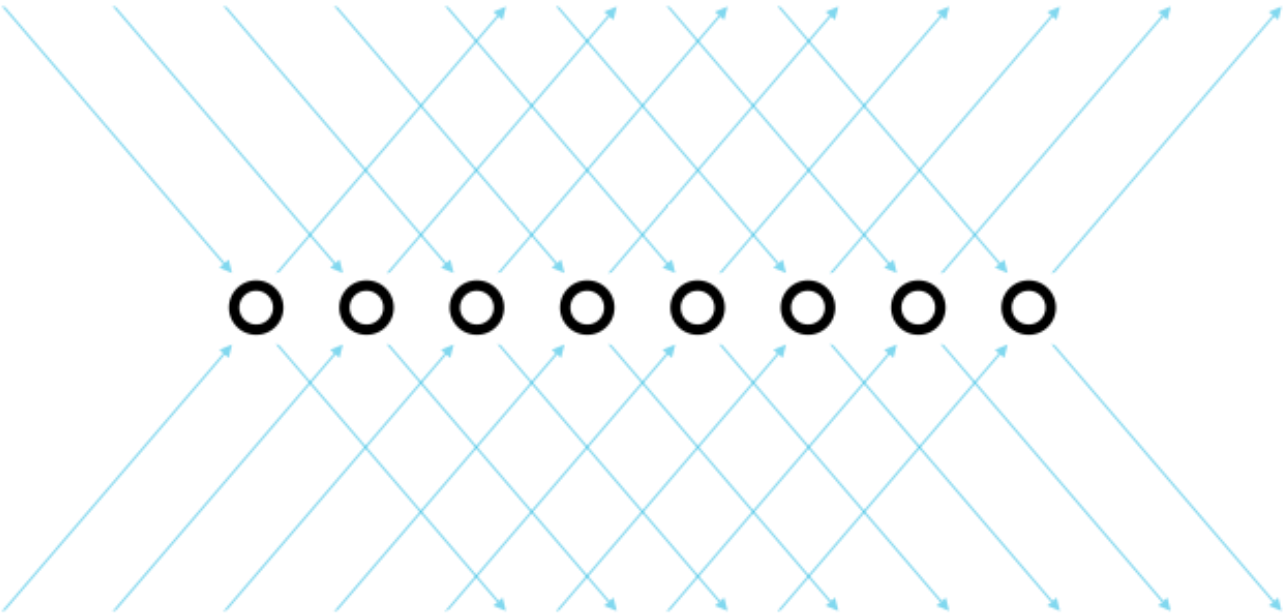
The middle layer represents the lion’s share of work, but also where an endless number of tools and activities can be employed without an absolute right or wrong way to go about it. Having said that, mapping the customer journey and blueprinting the service are mainstays. Other than that my rule of thumb is:
- Identify what is needed to learn and go with whatever makes sense.
- Just do what’s necessary. Everything else is waste.
- Communication beats documentation.
- Keep tabs on what’s current and new.
Strategyzer's integrated suite (customised)
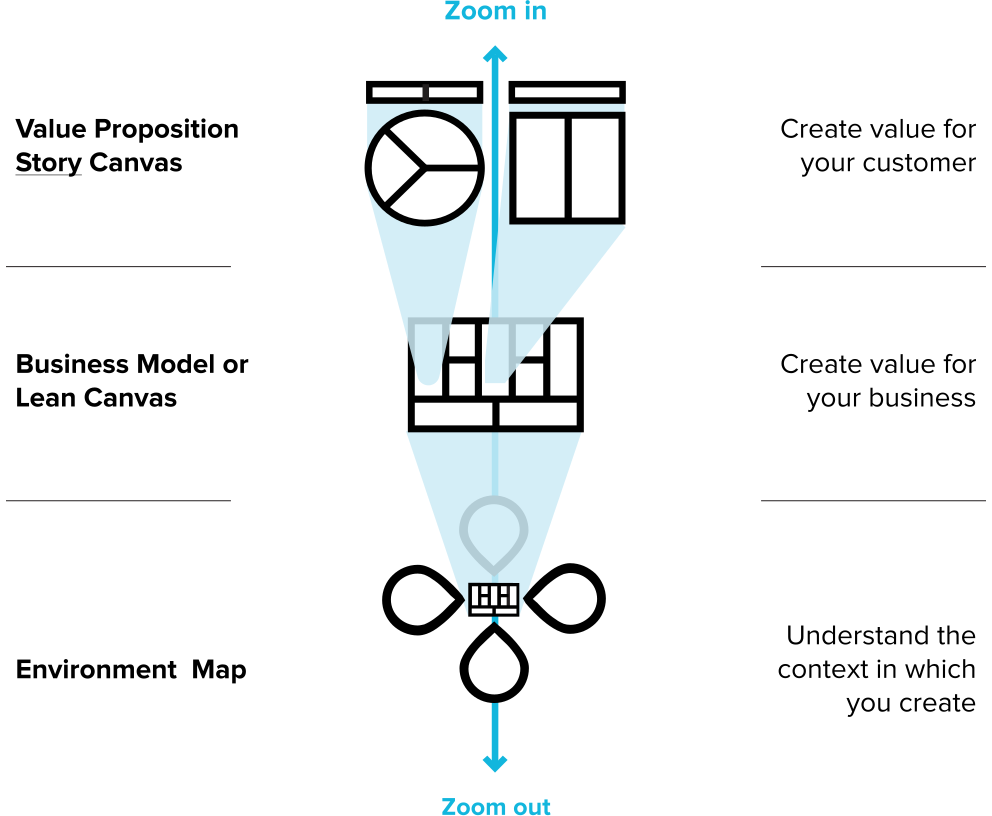
However important analysis is, synthesis is the holy grail. That’s why Strategyzer’s suite of tools sit at the top of my framework, albeit with a tweak of my own:
- Synthesis: They are visual and constrained, which force you to bring up the essential.
- Integration: They play out at different levels interfacing with each other.
- Alignment: They provide a common ground and shared language for value creation that both designers and non-designers can rally around.